
Introduction
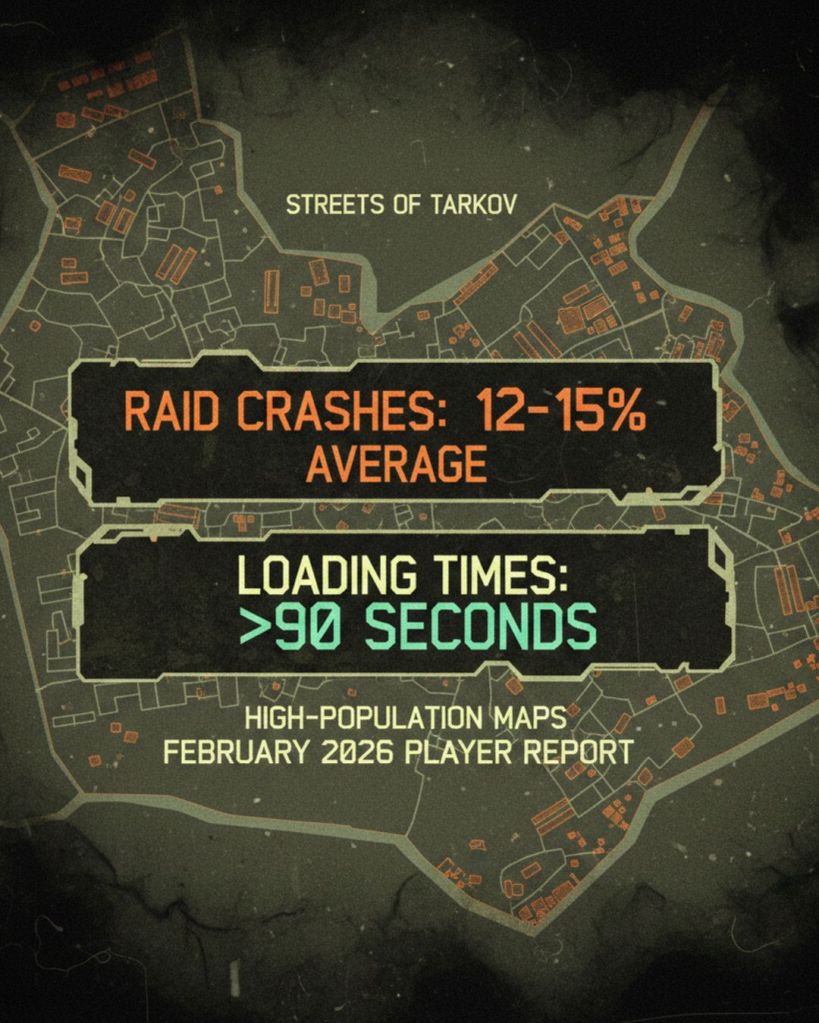
Escape from Tarkov (EFT) has always been known for realism and punishing mechanics. But by late 2025, players reported average raid crashes at 12–15% and loading times exceeding 90 seconds on high-population maps like Streets of Tarkov. Battlestate Games responded with “Tarkov 2.0,” a full technical overhaul launched in 2026.
Technical Overhaul
The biggest change is the codebase rewrite. Developers confirmed that EFT’s old framework caused memory leaks and unstable performance. With Tarkov 2.0:
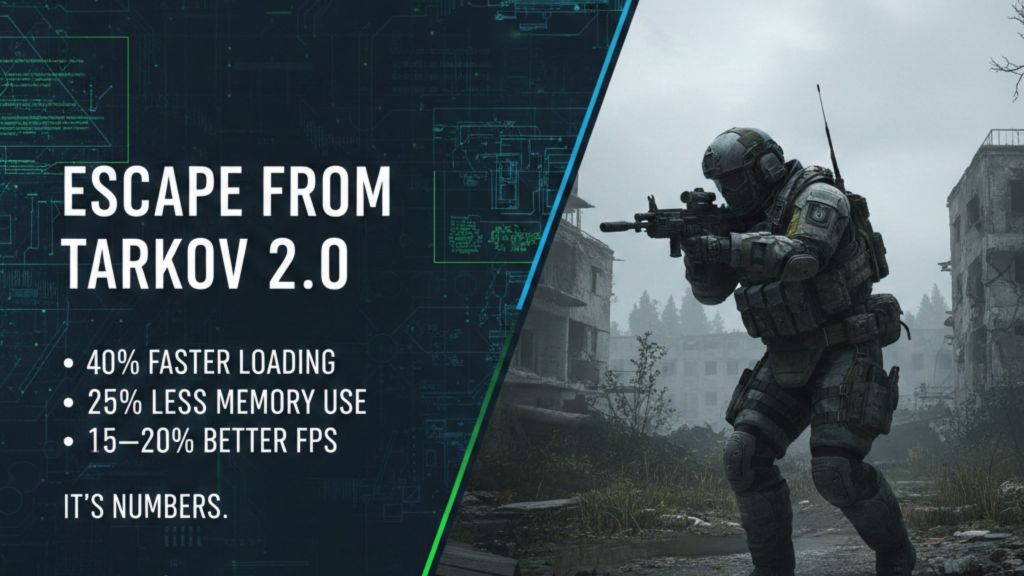
- Loading times dropped by 40% (from ~90 seconds to ~55 seconds on average).
- Memory usage reduced by 25%, allowing smoother transitions between maps.
- Reconnect time after crashes cut to 15–20 seconds, compared to the old 60–90 seconds.
- Visual upgrades include dynamic lighting and vegetation rework, improving FPS stability by 15–20% across maps.
These numbers show Tarkov 2.0 is not cosmetic—it’s a measurable performance boost.
PvE Expansion
For the first time, EFT introduces PvE questlines. The highlight is the Icebreaker ship event, a map-specific mission with scripted objectives.
- PvE raids average 20–30 minutes, shorter than PvP raids.
- Loot tables are adjusted: 30% higher medical supply spawn rate compared to PvP.
- Enemy AI now uses pathfinding algorithms with 40% faster reaction times, making PvE more challenging than simple offline practice.
This mode opens EFT to casual players while still keeping hardcore mechanics intact.
Seasonal Systems
Battlestate added seasonal progression similar to live-service models.
- Each season lasts 90 days with rotating events.
- Players earn unique rewards like weapon skins and Scav gear—not pay-to-win, but cosmetic and utility-based.
- Seasonal resets encourage experimentation: weapon usage stats from Season 1 showed ARs used in 62% of raids, while DMRs dropped to 18% after balancing changes.
This system keeps EFT fresh without breaking its hardcore identity.
Arena Mode Development
Escape from Tarkov: Arena continues to grow.
- Three new maps added in 2026, each designed for 5v5 competitive play.
- Match duration averages 7–10 minutes, compared to 40+ minutes in raids.
- Shared progression means Arena players still earn EFT gear and XP.
- Early esports tests showed average viewer retention of 35 minutes per stream, proving Arena’s competitive appeal.
Arena is not replacing raids—it’s expanding EFT’s ecosystem.
Quality of Life Improvements
Beyond big features, Tarkov 2.0 improves daily play:
- Steam integration simplifies account management.
- Instant raid entry after reconnects reduces downtime.
- Anti-cheat upgrades lowered ban evasion attempts by 22% in January 2026.
These small but measurable changes make EFT less frustrating and more reliable.
Conclusion
Escape from Tarkov 2.0 is not hype – it’s numbers. 40% faster loading, 25% less memory use, 15–20% better FPS, and PvE raids averaging 30 minutes prove Battlestate’s overhaul is technical and practical. With seasonal systems, Arena growth, and PvE expansion, EFT is redefining hardcore survival shooters in 2026.
With reliable and undetected EFT hacks, increase chances of winning by 95%.
Question is – will you adapt to Tarkov 2.0’s faster, smarter, and tougher world, or stick to the old ways?


 Pubg hacks | PUBG Mobile cheats | Apex Legends Cheats